
- Home
- >
- PFV Drone >
- FPV Drones >
- 10 inch FPV Drone
Product Categories
- FPV Drones
- FPV Battery Charger
- FPV Remote Control
- FPV Screen
- FPV Motor
- UAV Drone
- Cleaning Drone
- Tethered Drone
- Fixed Wing Drone
- Lower the fixed wing
- Drone Mounting
- Fire Nozzle
- Fire Hose
- Fire Bucket
- Dry Power Fire extinguishing tank 10L/20L/30L
- Broken Window fire bomb laucher
- Broken window fire bomb
- 6-way thrower
- Dry powder dire ball
- Dry powder water based fire bomb 15L/25L/50L
- Forest fire extinguishing bomb
- Searchlight
- Light module
- Small load dropping equipment
- Material transport box
- Downcomer
- Fire bomb thrower
- megaphone
- seachlight
- 60mm thrower
- 80mm thrower
- 82-2mm thrower
- 48mm grenade laucher
- Trap net transmitter
- Smock bomb launcher
- High-pressure cleaning kit
- Water intake device
- fire breathing device
- gas detecion equipment
- Water flow meter
- Spraying painting set
- 15kg large load head
- 50kg large load head
- Lidar scaning system
- High-altitude ckeaning kit
- FPV Frame Kits
- FPV Stack
- FPV Camera
- FPV Goggles
- Drone battery
- Lipo Battery
- Lithium-Ion Battery
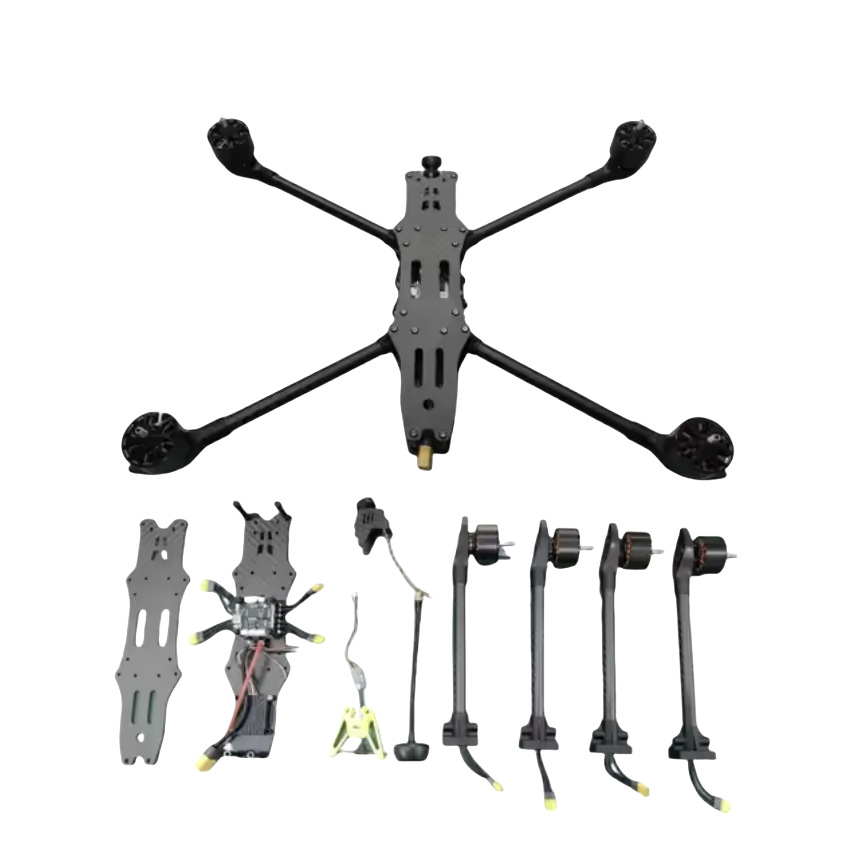
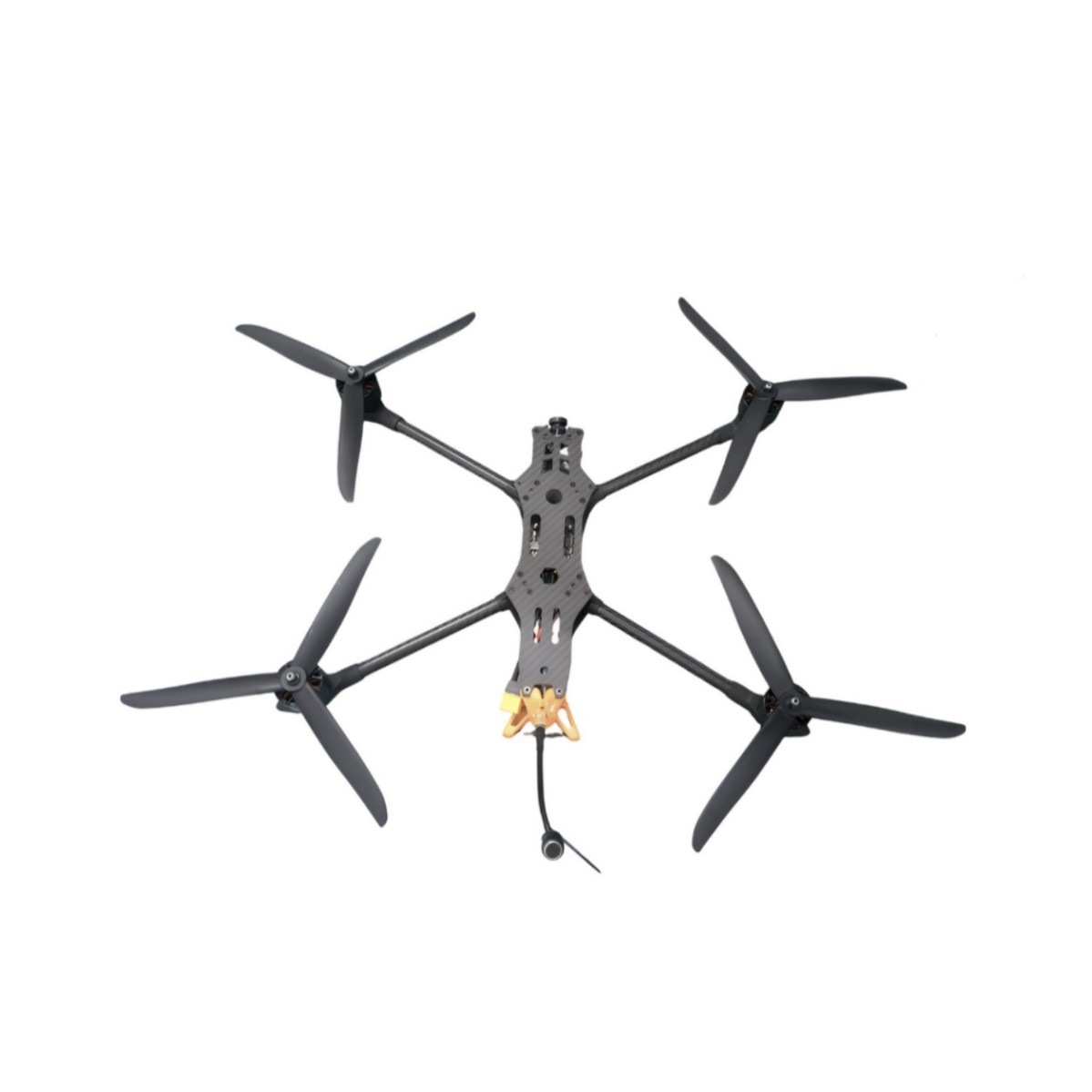

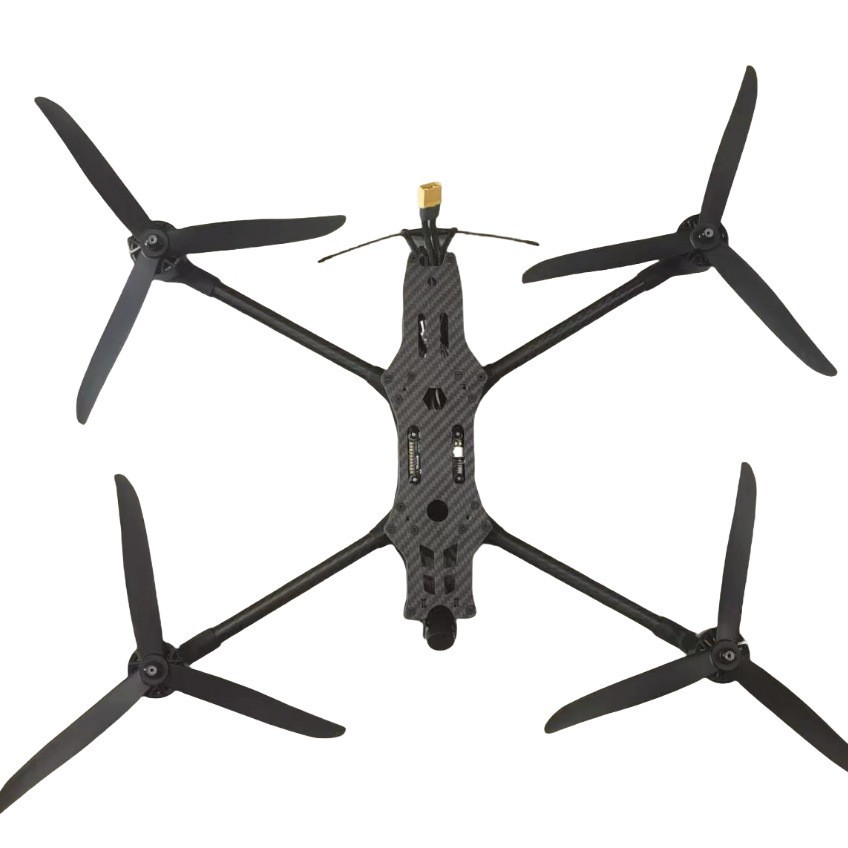
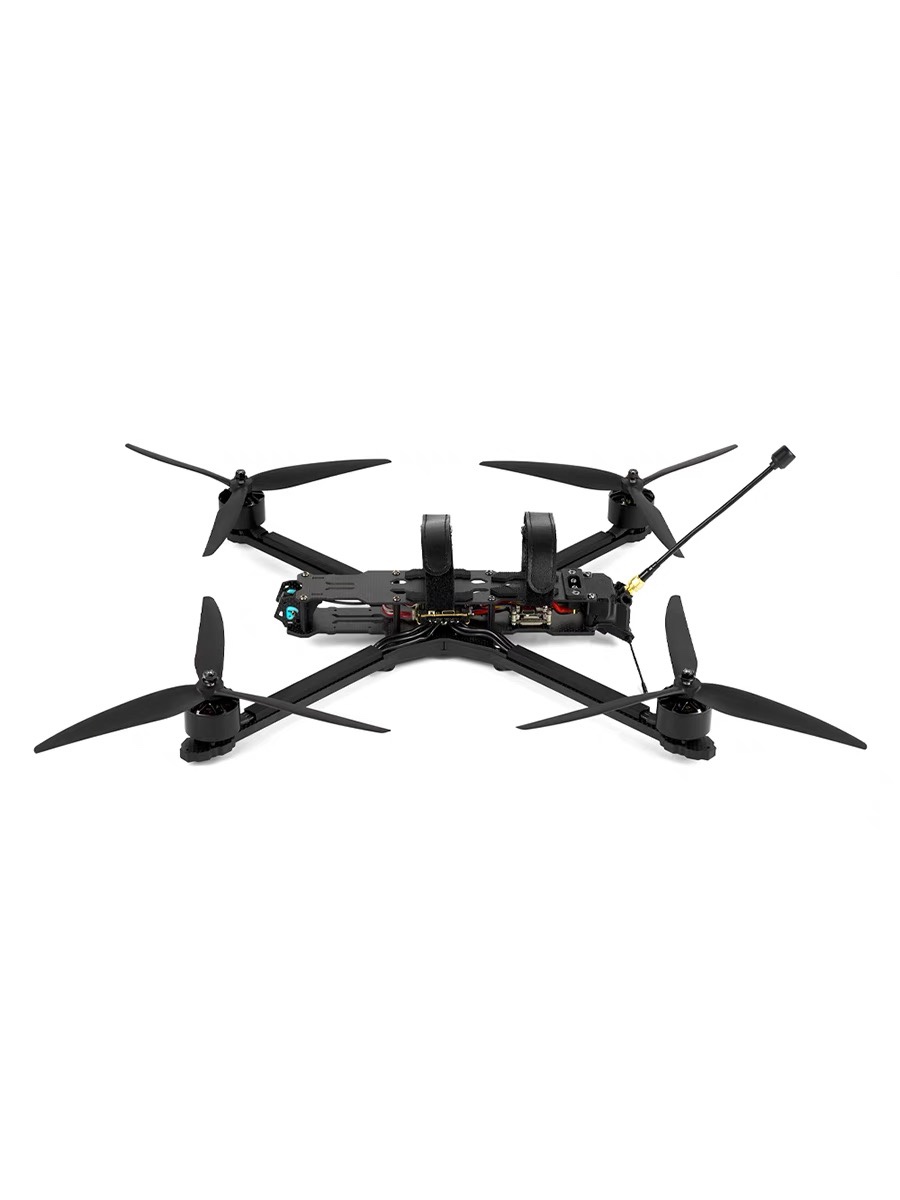
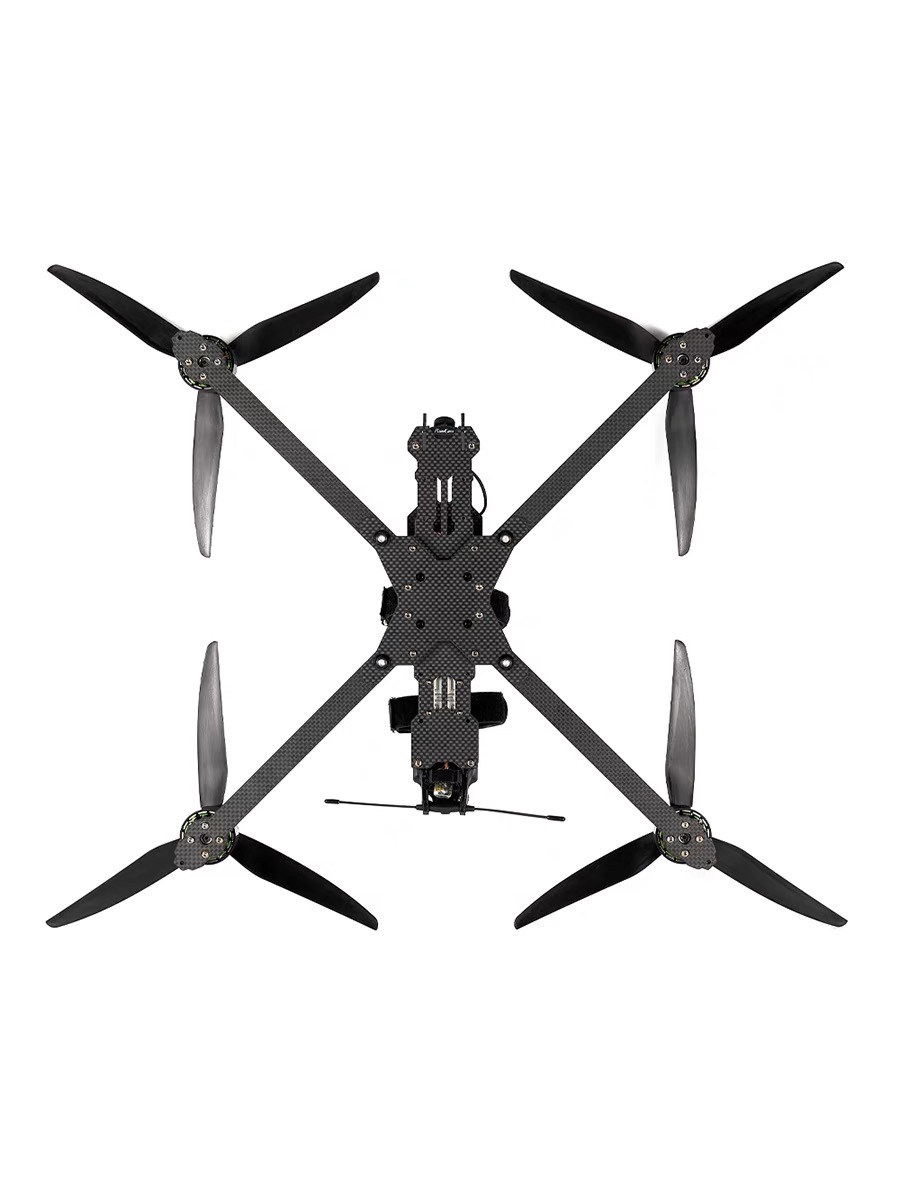
Net Weight: 793g
Size Inch (mm): 420*420*60
Frame: 10Inch Frame
Wheelbase: 396mm
Flight Control: UMI BL F405 (Optional)
ESC: UMI 60A 4-in-1
Video Transmission: UMI 5.8G 3W Video Transmission (Optional)
Camera: UMI1800TVL Low Latency FPV Camera (Optional)
Motor: UMI 3115 900KV
Propeller: 1050 (carbon fiber nylon)
Recommended battery: 6S 10000 10-45C XT60 plug
Core Philosophy & Ideal Use Cases
This is a mission-specific aircraft. You build a 10-inch for one of two primary reasons:
-
Ultra-Long-Range Exploration (ULLR): The primary use. The sheer prop efficiency allows it to carry very large capacity Li-Ion battery packs (e.g., 6S4P 21700) for flight times exceeding 20-40 minutes and covering distances of 20+ kilometers round-trip.
-
Heavy Lift / Payload Carrier: To carry professional cameras (e.g., GoPro with large cage, small mirrorless), specialized sensors (LiDAR, multispectral), or delivery mechanisms. This is for professional/commercial applications.
-
NOT for: Acrobatic freestyle, proximity flying, or learning. It's a cruiser, not a fighter jet.
Key Characteristics
-
Efficiency over Power: Optimized for amps-per-watt, not peak thrust. It flies smoothly and efficiently at a cruise throttle (25-40%).
-
High Inertia & Mass: It carries a lot of weight (often 1.5kg - 2.5kg+ AUW). It handles wind well but cannot change direction quickly. Recovery from mistakes is slow.
-
High Visibility & Noise: It is large, loud, and can be seen/heard from very far away. Stealth flying is impossible.
-
High Consequence: A crash due to signal loss, battery failure, or pilot error often means total loss of a very expensive platform, potentially in inaccessible terrain.
Key Components for a 10-inch Build
1. Frame:
-
True X or "Long-Range" Design: Frames are less common. You'll likely use frames from companies like Flywoo, Armattan (Chucky), or STM that are designed for 8-10" props. They are stout and have ample space for huge batteries and dual GPS.
-
Material: Heavy-duty, thick-carbon frames to handle the mass and vibration.
2. Motors:
-
Size: 2812, 2814, 3110, or even 3510. The stator is tall, not wide, prioritizing torque for large, slow-spinning props.
-
KV (RPM per Volt): Very Low KV. For 6S, typical KV is 700-1100. This allows the use of massive, high-pitch props without over-amping the ESCs.
-
Mounting: Often use a larger bolt pattern (16x16mm or 16x19mm) and a thicker shaft (4mm).
3. Electronic Speed Controllers (ESCs) & Flight Controller (FC):
-
ESC Amperage: Surprisingly, peak amperage isn't sky-high due to low KV. A 50A-60A 4-in-1 ESC is often sufficient, but reliability is paramount. High-quality components are a must.
-
FC: An F7 or H7 with multiple UARTs is essential. You'll need them for: GPS #1, GPS #2 (for redundancy), Remote Receiver, Telemetry, maybe an Air Traffic Module (ADSB).
-
Vibration Damping: Critical. Use thick, soft TPU gummies or a full soft-mount stack to isolate the FC from motor/prop harmonics.
4. Propellers:
-
The Heart of the System: 10x4.5, 10x5, 10x7, or even specialized props like the 10x4.5 Cyclone or Ethix S4. Pitch and design are tuned for efficiency.
-
Material: High-quality, balanced carbon fiber or stiff plastic (like HQProp). Unbalanced props at this size cause destructive vibration.
5. Battery & Power System:
-
The Game Changer: This is where 10-inch shines.
-
LiPo: Used for lighter builds or payload carriers needing high discharge (e.g., 6S 3300-5000mAh).
-
Li-Ion (NMC): The standard for ULLR. 6S2P, 6S3P, or 6S4P packs built from 21700 cells (e.g., Samsung 40T, 50S, Molicel P42A). These offer incredible energy density (Wh/kg), trading peak power for endurance. Flight times of 30-60 minutes are possible.
-
-
Voltage Regulator: A high-quality, filtered 9V/12V BEC is needed to power VTX, GPS, and receiver cleanly.
6. FPV & Control Link (CRITICAL)
-
Control Link (RC):
-
ExpressLRS (ELRS) 900MHz is the absolute minimum. 2.4GHz can be used for mid-range, but 900MHz provides better penetration and range for the price.
-
Redundancy is common: A primary 900MHz link with a crossfire (915MHz) or LoRa-based backup receiver on a different frequency. Some use TBS Crossfire Diversity with two receivers.
-
Transmitter Power: 1W (1000mW) is standard, often pushed to 2W in open areas.
-
-
Video Link (VTX):
-
Digital is dominant: DJI O3 Air Unit is popular for its incredible recording and good range. Walksnail and HDZero are also used, with Walksnail offering higher power VTX options.
-
Analog + Module: Some purists use 1.3GHz (Ghz) analog systems for ultimate penetration and range, paired with a 2.4/5.8GHz backup or telemetry-based system like TBS Fusion.
-
Antennas: High-gain directional antennas on the ground (e.g., helical, patch) are a must for maximum range. Trackers (like the TBS Tracker) that automatically point at the drone are used in extreme setups.
-
7. Navigation & Safety Systems (Non-Negotiable)
-
Dual GPS: Two independent GPS modules (e.g., Beitian BN-880, M8N or M10). If one fails, the other provides data. Essential for GPS Rescue.
-
Compass/Magnetometer: Usually integrated with the GPS. Required for proper navigation home.
-
Return-to-Home (RTH) & GPS Rescue: Your primary safety net. Must be meticulously tested at altitude in a safe area.
-
Beeper with Independent Battery: A loud buzzer (Vifly Finder 2) that works after a crash, even if the main battery is ejected.
-
Remote ID Module: Legally required in many regions for drones of this size/weight.
Pre-Built & Frames
True 10-inch BNF drones are rare. You will mostly be building from a frame kit or adapting a large 8-inch.
-
Flywoo Explorer LR 10" (one of the few dedicated BNFs)
-
Armattan Chucky 10" (robust frame)
-
STM 10" Frames (from the endurance community)