
- Home
- PFV Drone
- UAV Drone
- Cleaning Drone
- Fixed Wing Drone
- Drone battery
- Drone Mounting
- Fire Nozzle
- Fire Hose
- Fire Bucket
- Dry Power Fire extinguishing tank 10L/20L/30L
- Broken Window fire bomb laucher
- Broken window fire bomb
- 6-way thrower
- Dry powder dire ball
- Dry powder water based fire bomb 15L/25L/50L
- Forest fire extinguishing bomb
- Searchlight
- Light module
- Small load dropping equipment
- Material transport box
- Downcomer
- Fire bomb thrower
- megaphone
- seachlight
- 60mm thrower
- 80mm thrower
- 82-2mm thrower
- 48mm grenade laucher
- Trap net transmitter
- Smock bomb launcher
- High-pressure cleaning kit
- Water intake device
- fire breathing device
- gas detecion equipment
- Water flow meter
- Spraying painting set
- 15kg large load head
- 50kg large load head
- Lidar scaning system
- Factory Show
- News
- Contact Us
- Home
- PFV Drone
- FPV Drones
- FPV Motors
- FPV Frame Kits
- FPV Stack
- FPV Goggles
- radio remote controller
- Flight controller
- 7inch FPV Drone
- 3inch FPV Drone
- 5inch FPV Drone
- 10inch FPV Drone
- 13inch FPV Drone
- 15inch FPV Drone
- FPV Camera
- UAV Drone
- TF100 Industrial UAV Drone
- XT-10 Industrial UAV Drone
- X6-10 Industrial UAV Drone
- F60 Industrial UAV Drone
- F100 Industrial UAV Drone
- H120 Industrial UAV Drone
- F140 Industrial UAV Drone
- H200 Industrial UAV Drone
- H300 Industrial UAV Drone
- H400 Industrial UAV Drone
- Cleaning Drone
- F100-QX-D UAV Cleaning drone
- F60-QX-F Cleaning Drone
- Fixed Wing Drone
- XF-200
- HQ-600
- Q13
- Q20
- Q32
- Q40
- Q50
- Q80
- Q150
- Drone battery
- Drone Mounting
- Fire Nozzle
- Fire Hose
- Fire Bucket
- Dry Power Fire extinguishing tank 10L/20L/30L
- Broken Window fire bomb laucher
- Broken window fire bomb
- 6-way thrower
- Dry powder dire ball
- Dry powder water based fire bomb 15L/25L/50L
- Forest fire extinguishing bomb
- Searchlight
- Light module
- Small load dropping equipment
- Material transport box
- Downcomer
- Fire bomb thrower
- megaphone
- seachlight
- 60mm thrower
- 80mm thrower
- 82-2mm thrower
- 48mm grenade laucher
- Trap net transmitter
- Smock bomb launcher
- High-pressure cleaning kit
- Water intake device
- fire breathing device
- gas detecion equipment
- Water flow meter
- Spraying painting set
- 15kg large load head
- 50kg large load head
- Lidar scaning system
- Factory Show
- News
- Company News
- Industry News
- Blog
- Contact Us
- Home
- >
- PFV Drone >
- FPV Frame Kits >
- 15 inch FPV Frame
Product Categories
- FPV Drones
- UAV Drone
- Cleaning Drone
- Tethered Drone
- Fixed Wing Drone
- Lower the fixed wing
- Drone Mounting
- Fire Nozzle
- Fire Hose
- Fire Bucket
- Dry Power Fire extinguishing tank 10L/20L/30L
- Broken Window fire bomb laucher
- Broken window fire bomb
- 6-way thrower
- Dry powder dire ball
- Dry powder water based fire bomb 15L/25L/50L
- Forest fire extinguishing bomb
- Searchlight
- Light module
- Small load dropping equipment
- Material transport box
- Downcomer
- Fire bomb thrower
- megaphone
- seachlight
- 60mm thrower
- 80mm thrower
- 82-2mm thrower
- 48mm grenade laucher
- Trap net transmitter
- Smock bomb launcher
- High-pressure cleaning kit
- Water intake device
- fire breathing device
- gas detecion equipment
- Water flow meter
- Spraying painting set
- 15kg large load head
- 50kg large load head
- Lidar scaning system
- High-altitude ckeaning kit
- FPV Frame Kits
- FPV Stack
- FPV Camera
- FPV Goggles
- Drone battery
- Lipo Battery
- Lithium-Ion Battery
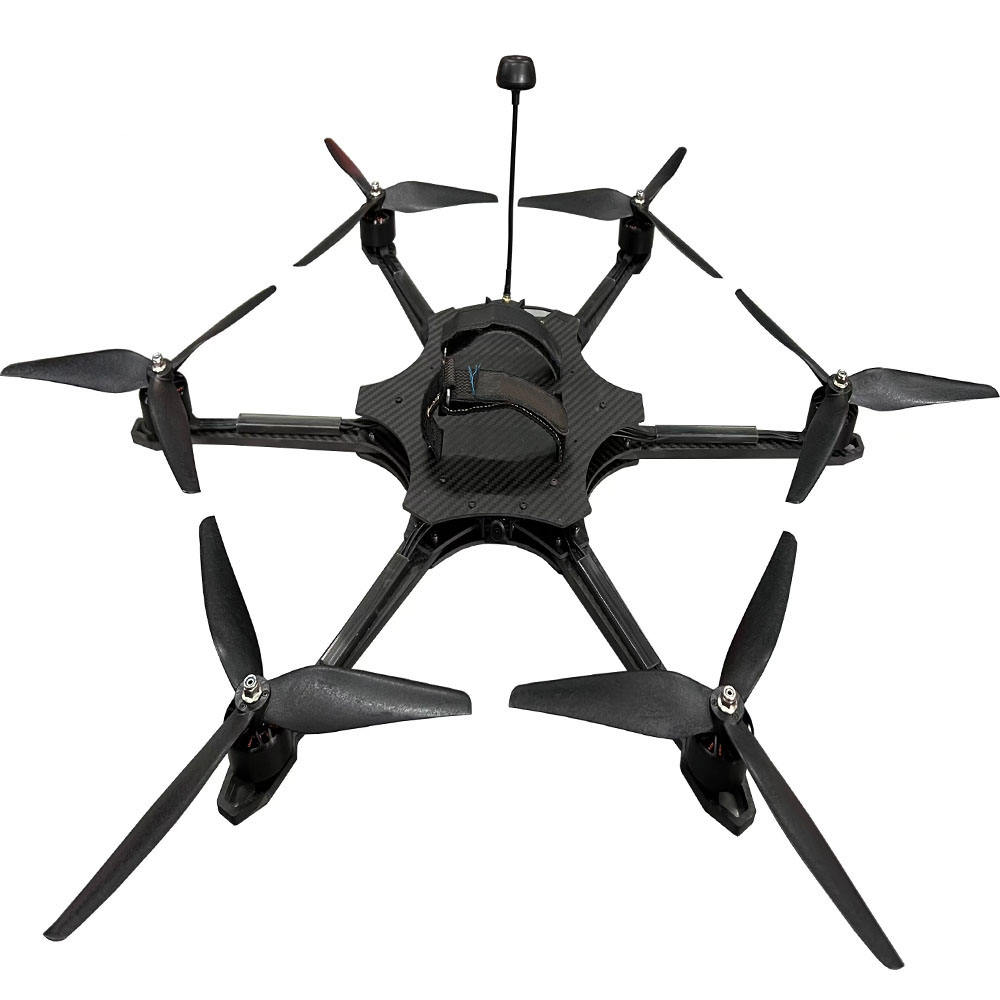
Net Weight: 2080g
Frame: 15Inch frame
Wheelbase: 647mm
Size Inch: 517*517*80mm
Material: 3K T300 carbon fiber
Flight control: DroView BL F405 (optional)
ESC: DroView 80A single ESC
Image transmission: DroView 5.8G 3W image transmission (optional)
Camera: DroView1800TVL night vision FPV camera (optional)
Motor: DroView 4214 380KV
Propeller: 1507 (glass fiber nylon)
Recommended battery: 8S 8000 10-50C XT60 plug*2
Fundamental Reality Check
Before we continue, you must understand:
-
This is likely illegal to fly in most jurisdictions without specific commercial certifications and waivers.
-
This is potentially lethal equipment on par with power tools or small machinery.
-
The cost is comparable to a used car.
-
This is not for recreation. It's for specific professional applications.
If you're still reading, you're either a commercial operator, researcher, or someone who needs to understand the engineering limits. Let's proceed.
Core Applications (The ONLY Reasons to Build This)
-
Heavy-Payload Professional Cinematography: Carrying full-frame mirrorless cameras (Sony A7 series, Panasonic S1H) with 3-axis brushless gimbals for Hollywood/TVC productions.
-
Industrial Inspection & Surveying: Carrying LiDAR units (Velodyne, Livox), multispectral sensors, or high-resolution mapping cameras for agriculture, mining, or infrastructure.
-
Scientific Research: Atmospheric sampling, wildlife monitoring, or glacier surveying where endurance and payload capacity are critical.
-
"Maximum Endurance" Record Attempts: Chasing multi-hour flight times with massive battery arrays.
Technical Specifications & Architecture
Airframe & Physical Design
-
Size: Motor-to-motor diagonal typically 1200-1500mm (≈4-5 feet).
-
Configuration: Almost always a hexacopter (6 motors) or octocopter (8 motors) for redundancy. If a motor fails on a hexa/octo, it can still land safely. On a quad, it crashes catastrophically.
-
Frame Material: Aerospace-grade carbon fiber (4-6mm thick), CNC-machined aluminum joints, or carbon fiber tubes with aluminum hubs.
-
Weight: 8-15kg (18-33 lbs) without payload. Up to 25kg (55 lbs) total takeoff weight—the FAA Part 107 limit without special waivers.
Propulsion System
-
Motors:
-
Size: 80xx, 90xx, or 100xx outrunners (e.g., 8012, 9015, 10020).
-
KV: 60-200KV on 12S (44.4V) or even 14S (51.8V) systems.
-
Power: 500W-1500W continuous per motor. Peak thrust per motor: 8-15kg.
-
Mounting: 50mm bolt circle patterns, 8-10mm motor shafts.
-
-
Propellers:
-
15x5, 15x5.5, 16x5.4, or 17x5.8 carbon fiber reinforced plastic (CFRP) or full carbon fiber.
-
Custom pitch profiles optimized for either static thrust (payload lifting) or cruise efficiency (long range).
-
Hub design: Often uses M10 or M12 threaded hubs with precision machined adapters.
-
-
ESCs:
-
80A-150A HV (High Voltage) ESCs per motor.
-
BLHeli_32 or dedicated industrial controllers with active cooling.
-
Telemetry-enabled for current monitoring per motor.
-
Flight Control & Avionics
-
Flight Controller: Pixhawk 2.1 (Cube), Holybro Durandal, or similar running ArduPilot exclusively.
-
Betaflight/iNav cannot handle the complexity or safety requirements.
-
-
Features Required:
-
Dual IMUs (inertial measurement units) for redundancy
-
Vibration isolation with advanced filtering
-
Multiple CAN buses for peripherals
-
Expansion ports for companion computers
-
-
Companion Computer: NVIDIA Jetson, Raspberry Pi CM4, or Intel NUC for:
-
Object avoidance (stereo cameras, ultrasonic)
-
Advanced mission planning
-
Real-time data processing from payloads
-
4G/LTE telemetry backup
-
Power System
-
Voltage: 12S (44.4V) standard, 14S (51.8V) for high-performance.
-
Batteries:
-
For Payload Lifting: 12S 10,000-20,000mAh LiPo packs. Flight time: 12-20 minutes with heavy payload.
-
For Endurance: Custom Li-Ion (21700/18650) packs in 12S6P to 12S10P configuration. 25,000-40,000mAh capacity. Flight time: 60-180+ minutes (light payload).
-
-
Power Distribution:
-
Custom PDB with XT150, AS150, or Anderson Powerpole connectors.
-
High-current contactors for emergency cutoff.
-
Multiple regulated outputs: 5V, 12V, 24V for various systems.
-
FPV & Control Links (Professional Grade)
-
Primary Control:
-
900MHz TBS Crossfire at 2W with diversity receivers.
-
MikroKopter or Futaba professional systems.
-
MAVLink over 4G/LTE as primary for BVLOS commercial ops.
-
-
Backup Control: Independent 433MHz system (like RFD900x telemetry modem with RC passthrough).
-
Video Links:
-
Primary: DJI O3 Air Unit or DJI Transmission for pilot FPV and HD recording.
-
Backup: Analog 1.3GHz with high-gain tracking ground station.
-
Payload Feed: HDMI/SDI wireless transmitter for camera operator.
-
-
Ground Station: Dual operator minimum:
-
Pilot: FPV goggles + monitor with telemetry overlay.
-
Mission Operator: Laptop with Mission Planner/QGroundControl, viewing live map, telemetry, and payload data.
-
Navigation & Safety Systems
-
GPS: Dual RTK (Real-Time Kinematic) GPS systems (e.g., Here3, Here+). Accuracy: 1-2cm vs. standard GPS's 1-2m.
-
Compass: Triple redundant magnetometers, placed far from power systems.
-
ADS-B In/Out: uAvionix pingStation or similar for manned aircraft awareness.
-
Terrain Following: Lidar altimeter or ultrasonic sensor for precise low-altitude flight.
-
Return-to-Home: Multiple redundant systems with smart decision logic.
-
Parachute Recovery System: Fruity Chutes or Skycat drone parachute for total system failure.
Estimated Costs (Prepare for Sticker Shock)
| Component Category | Low-End Estimate | Professional Grade |
|---|---|---|
| Frame & Hardware | $800 - $1,500 | $2,500 - $5,000 |
| Motors (6-8) | $600 - $1,200 | $2,000 - $4,000 |
| ESCs (6-8) | $400 - $800 | $1,200 - $2,400 |
| Flight Controller & Avionics | $500 - $800 | $1,500 - $3,000 |
| Batteries (2 packs) | $600 - $1,000 | $1,500 - $3,000 |
| FPV/Control Systems | $800 - $1,500 | $2,500 - $5,000 |
| Subtotal (Drone Only) | $3,700 - $6,800 | $11,200 - $22,400 |
| Ground Station | $1,500 - $3,000 | $5,000 - $10,000 |
| Payload (Camera/Gimbal) | $1,000 - $5,000 | $10,000 - $30,000+ |
| TOTAL | $6,200 - $14,800+ | $26,200 - $62,400+ |
Note: These are conservative estimates. Professional cinema rigs (like Freefly Alta X) cost $25,000-$50,000 for the drone alone.
Regulatory Reality (The Biggest Hurdle)
United States (FAA):
-
Part 107 Certification: Mandatory for commercial use.
-
Registration: As a "small UAS" under 55 lbs, or under Part 48 if over.
-
Remote ID: Required for all drones over 0.55 lbs after March 2024.
-
Waivers Required:
-
BVLOS (Beyond Visual Line of Sight)
-
Operations Over People (Category 3 or 4)
-
Night Operations (if applicable)
-
Altitude > 400ft AGL
-
Operations in Controlled Airspace (requires LAANC or authorization)
-
Europe (EASA):
-
"Specific" Category operations (C5/C6 class).
-
Operator Registration and Remote Pilot License.
-
Detailed Operational Risk Assessment.
-
Insurance with high liability limits (€1M+).
Everywhere:
-
You are essentially operating a private aircraft.
-
Local bylaws may prohibit takeoff/landing.
-
Noise ordinances will be a factor.
-
Privacy laws apply to any imaging.
Safety Protocols (Non-Negotiable)
-
Pre-Flight Checklist: 50+ item checklist, verified by two people.
-
Flight Zone: Minimum 500m (1640ft) clear radius from people, property, and roads.
-
Fail-Safe Testing: Weekly testing of all redundant systems.
-
Maintenance Logs: Detailed records of every component service.
-
Emergency Procedures: Documented response for every failure mode.
-
Spotter Network: Multiple visual observers with radios during flight.
-
Weather Minimums: No flight if winds > 15 knots, visibility < 3 miles, or precipitation.
-
NOTAM Filing: For any flight in controlled airspace.
The Hard Truth About 15" "FPV" Drones
This is not FPV as you know it:
-
You don't "fly" it in the FPV sense—you operate it. The experience is like flying a simulation, not immersive FPV.
-
Latency matters less than reliability. Digital systems with 50-100ms latency are acceptable.
-
Autonomy is the goal, not manual control. Waypoint missions are the primary mode.
-
The "FPV" feed is for situational awareness, not the primary means of navigation. You fly by instruments and maps.
-
A 15-minute flight might require 2 hours of setup and 1 hour of post-flight procedures.
Should You Build One?
Only if:
-
You have a clear commercial application that justifies the cost and regulatory burden.
-
You have professional aerospace, electrical, or software engineering experience.
-
You have $15,000+ disposable budget and 6+ months development time.
-
You have access to legal flight locations and can obtain necessary permits.
-
You have commercial liability insurance ($1M+ coverage).
If you're a hobbyist: Stop. Build a 7-inch drone. It's 1000% more fun, 95% cheaper, and 100% legal in comparison.
If you're a professional: Consider buying a Freefly Alta X, DJI Matrice 300, or similar commercial platform. The engineering, support, and regulatory compliance are already solved. Your time is better spent on your mission, not debugging custom drone systems.
The Verdict
A 15-inch FPV drone exists at the absolute frontier of what an individual or small team can realistically design, build, and operate legally. It represents the maximum practical size before entering the realm of full-scale commercial UAV manufacturers.
This is not the evolution of FPV—it's an entirely different field that happens to share some components. The skills, regulations, costs, and applications have almost no overlap with traditional FPV.
For 99.99% of people asking about 15-inch drones: You don't want one. You want the idea of one. The reality is paperwork, liability, enormous costs, and engineering headaches—with very little of the visceral thrill that makes FPV magical.
Final advice: If you're determined to work at this scale, get a job with a commercial drone company or cinematography team that already operates these systems. Learn on someone else's $50,000 platform before considering your own build.